Why a Defence Tech Company Is Worth What It Can Keep Building Under Attack
Russian sabotage is now targeting Europe's defence supply chain. The real value of a defence technology company lies in its ability to keep producing while an adversary tries to stop it.
Ask an investor what a European defence technology company is worth and the conversation turns to software, patents and growth. Ask the procurement officer responsible for buying its equipment and the question is a different one: how many units can be delivered each month, and what happens if the assembly line is hit. That is the right question, because the real value of a defence technology company lies in its ability to keep producing while a determined adversary tries to stop it.
The primes know this, and so does Moscow
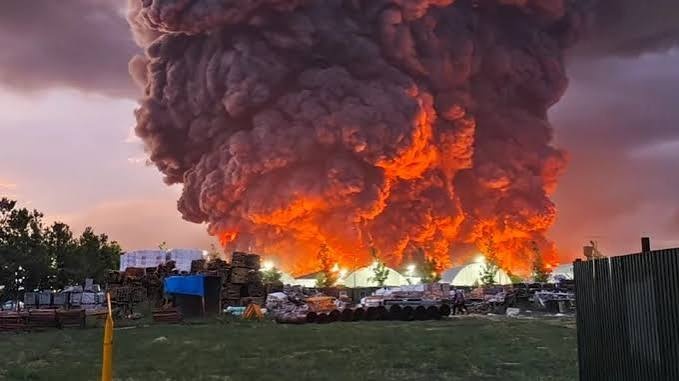
The primes have spent decades hardening their production lines, which is why they still hold ten-year contracts. Moscow has drawn the same lesson from Ukraine, where output has mattered more than design, and has concluded that interrupting a European supplier’s production is cheaper than stealing its technology. This August the Tallinn premises of the robotics firm Milrem were set alight in an attack Estonia has attributed to Russian security services, and last month a Swindon man was charged with passing the locations of local drone factories to what he believed was Russian intelligence, although he has yet to stand trial. The full list of known incidents is set out below.
Where the defence fails
The founder
Most of these companies are founder-led, so critical knowledge and relationships sit with one or two people, and few could restart the line if that person left. Founders also travel and speak in public, which makes them the obvious approach for a hostile intelligence service.
The manufacturing
The value may lie in the software, but the hardware is often assembled by a contract manufacturer on an industrial estate, staffed by people nobody has vetted, and the security requirements set by the prime rarely reach that far down the supply chain.
The people
Rapid hiring means trust is often established by little more than a CV, while Russia, Belarus and China run patient programmes to exploit exactly this kind of workforce. A company that would never let an unvetted visitor onto the shop floor might give a new employee the design files on their first day.
Defend, sustain, recover
Every board ought to know how long it would take to resume deliveries if it lost its founder, its assembly partner or its main site tomorrow, and finding out means applying three disciplines to the company.
Defend: Bring the contract manufacturer within the company’s own security framework, vet its staff and control who can reach the design files.
Sustain: Rehearse a succession plan so that the loss of one person does not halt production, and qualify a second source for critical components.
Recover: Have a second site ready and agree the response plan before a crisis, so that customers are still supplied in the weeks that follow.
The value is in the delivering
A defence technology company is worth whatever it can keep building while someone is trying to stop it, and one that can defend, sustain and recover will find that its valuation largely takes care of itself.
Alma Risk already works with a number of European defence technology companies on these threats, and if any of this sounds familiar, I would welcome the conversation.
Known incidents, 2024 to date
The Associated Press has counted around 200 incidents of sabotage and malign activity across Europe blamed on Russia since February 2022. The cases below are those connected to the defence supply chain, newest first, with the status of each as last reported.
September 2026, Swindon, UK. A 31-year-old man has been charged under the National Security Act with assisting a foreign intelligence service and with preparatory conduct, after allegedly passing the locations of four local drone manufacturing sites, and details of activity at one of them, to a contact he believed to be Russian military intelligence. He has been remanded in custody and the case sent to the Old Bailey, but he has yet to stand trial.
September 2026, Munich, Germany. Arson close to the offices of Helsing and Rohde & Schwarz led to the arrest of two Bulgarian nationals, and German authorities are reported to suspect the GRU; the case remains under investigation.
2026, Prešov, Slovakia. Slovak authorities say they thwarted a planned arson attack on the Skyeton plant, which produces reconnaissance drones for Ukraine, and detained Latvian and Ukrainian nationals whom investigators have linked to the Munich network.
August 2026, Tallinn, Estonia. The premises of Milrem Robotics, maker of the THeMIS unmanned ground vehicle supplied to Ukraine, were set alight, and three Latvian citizens were detained and handed over to Estonia. On 29 September 2026 the Estonian government formally attributed the attack to Russian security services.
January 2026, Lithuania. Prosecutors charged six people of Spanish, Colombian, Cuban, Russian and Belarusian nationality with terrorism offences over a failed 2024 arson attack on TVC Solutions, which makes mobile radio stations for the Ukrainian armed forces, and say the instructions came from GRU-linked individuals in Russia.
Czech Republic. A fire at LPP Holding, a drone and optical systems manufacturer, destroyed production facilities and stock; police treated it as deliberate and a possible terrorist act, and four people were detained over suspected Russian involvement.
October 2025, Poland and Lithuania. A Polish court convicted three Ukrainians for their roles in a Russian-linked arson group, including obstructing the investigation into the Warsaw and Vilnius fires, while a fourth man was sentenced in Lithuania for the arson attack on IKEA in Vilnius; five more people were sent for trial in 2026.
May 2024, Warsaw, Poland. The Marywilska 44 shopping centre was destroyed by arson, and in May 2025 the Polish prime minister said the attack had been ordered by Russian services, after which Russian diplomats were expelled.
2024, Germany. US and German intelligence are reported to have foiled a plot to assassinate Armin Papperger, chief executive of Rheinmetall.
March 2024, Leyton, London. A warehouse holding generators and Starlink equipment for Ukraine was set alight by a gang recruited through Wagner on behalf of Russian military intelligence. Six men were sentenced in October 2025 to between seven and 23 years, among them the first people convicted under the National Security Act 2023.
Reach out to our team with any questions about working with Alma, engaging in a consulting agreement, or using this website. We're here to support your understanding of our platform and services.