Ukraine Business Risk: Operational Security Challenges
Operating in Ukraine demands far more than conventional commercial planning. Conflict-related disruption, sanctions exposure, infrastructure vulnerability, supply chain instability, financial pressure, and heightened personnel and cyber risk have created a far more complex operating environment for businesses with interests in the region. For organisations maintaining a presence or exploring opportunities, success depends on combining operational resilience with strong compliance, intelligence-led decision-making, and robust risk management.
Operating in Ukraine presents a complex web of challenges that extend far beyond traditional commercial considerations. The ongoing conflict has fundamentally reshaped the risks of operating in an already complex environment before the full-scale invasion in 2022. The conflict has created an environment in which energy security, physical infrastructure, and operational continuity require constant reassessment. For organisations with interests in the region, understanding these evolving threats is essential for protecting personnel, assets, and long-term strategic objectives.
The Infrastructure Vulnerability Factor
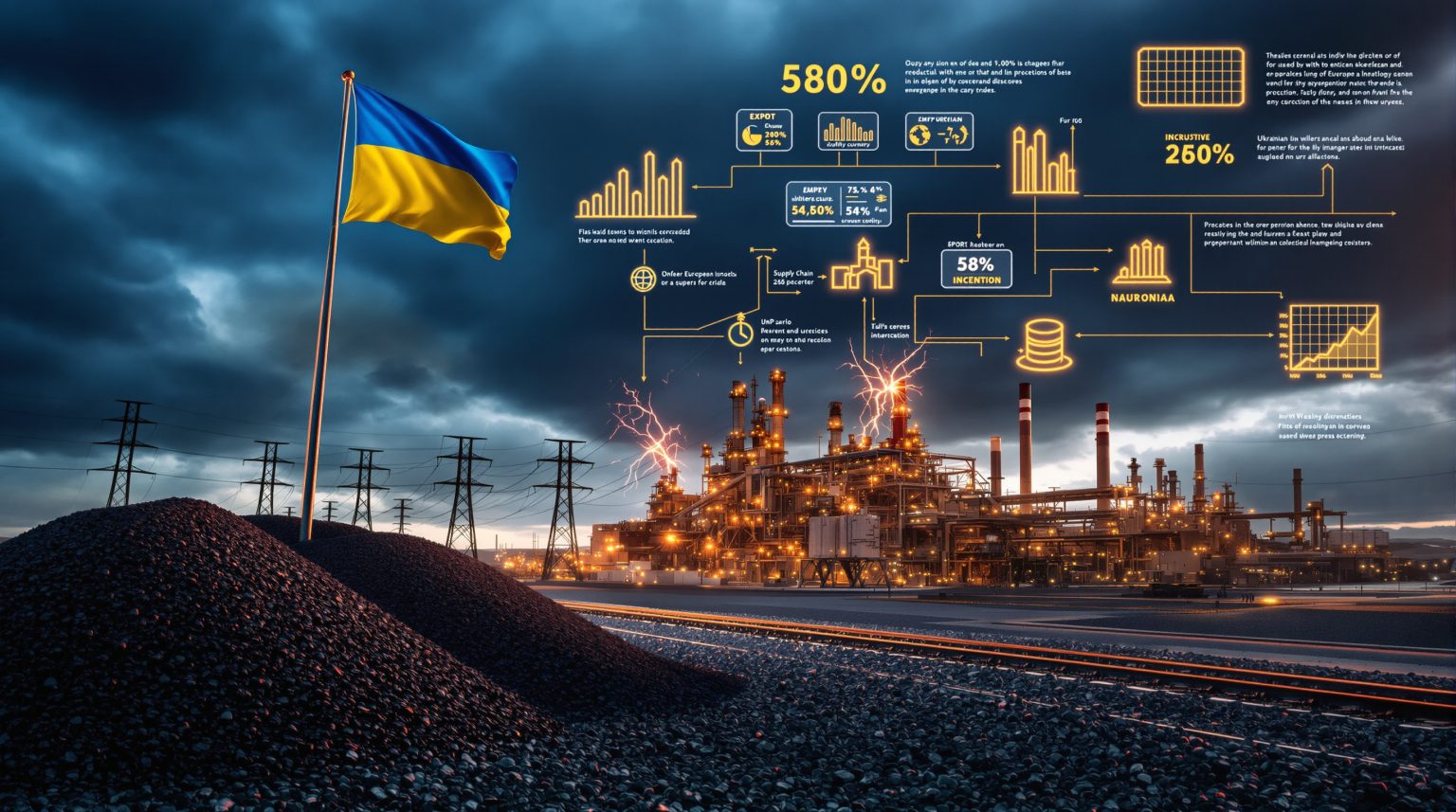
Ukraine's energy and transport infrastructure has become a focal point for any Ukraine business risk assessment. Systematic attacks on power generation and distribution networks have created persistent operational disruptions that affect businesses across all sectors. The European Bank for Reconstruction and Development has revised economic forecasts downward, attributing the deterioration primarily to extensive damage to the country's energy infrastructure.
Power Supply Continuity Challenges
Businesses operating in Ukraine face unprecedented volatility in electricity supply. The impact extends beyond simple inconvenience:
Manufacturing facilities struggle to maintain production schedules
Data centres and technology operations require extensive backup systems
Cold storage and logistics companies face inventory loss risks
Office operations experience reduced productivity during outages
Ukrainian businesses have demonstrated remarkable adaptability in coping with these challenges, implementing generator systems, battery storage, and flexible working arrangements. Although the rest of us may have much to learn here, these measures represent high additional costs and cannot fully eliminate operational risk.
Transport Network Disruption
Road, rail, and port infrastructure have experienced varying degrees of damage and operational constraints. Supply chain managers must factor in:
Route reliability variability depends on proximity to active conflict zones
Border crossing delays due to enhanced security protocols
Insurance premium increases for goods in transit
Alternative routing requirements that extend delivery timelines
The Black Sea grain corridor's fluctuating accessibility illustrates how geopolitical developments directly translate into commercial uncertainty, affecting not only Ukrainian businesses but their international trading partners.
Supply Chain Fragmentation and Adaptation
The broader implications of ukraine business risk extend well beyond national borders. Research examining perceived business risks among agri-food enterprises in countries like Egypt demonstrates how disruption in Ukraine creates ripple effects throughout global supply chains, particularly in sectors dependent on Ukrainian commodities.
Supply Chain Risk Category
Pre-Conflict Status
Current Status
Mitigation Complexity
Grain Exports
Stable
Volatile
High
Industrial Inputs
Reliable
Disrupted
Medium-High
Energy Supplies
Predictable
Uncertain
Very High
Logistics Services
Efficient
Constrained
High
Companies have responded by diversifying supplier bases, increasing inventory buffers, and developing contingency sourcing strategies. However, these adaptations increase working capital requirements and reduce operational efficiency.
Financial Performance Under Pressure
Quantifying Ukraine business risk involves examining how conflict conditions affect corporate financial health. A study of Ukrainian advertising and marketing companies reveals how sector-specific vulnerabilities interact with broader economic instability to impact profitability and sustainability.
The decline in entrepreneurial activity represents another dimension of economic cost. Research quantifying economic impacts highlights how small and medium-sized enterprises face disproportionate challenges, with many unable to access capital, insurance, or international markets under conflict conditions.
Currency and Banking Stability
Financial risk management has become more complex:
Exchange rate volatility complicates pricing and contract negotiations
Organisations require sophisticated treasury management and financial risk mitigation strategies that account for potential rapid deterioration in market conditions. Understanding organisational risk management principles becomes essential when operating in such environments.
Personnel Safety and Movement Security
For organisations with staff in Ukraine, personnel protection represents the most critical aspect of Ukraine business risk management. The threat landscape encompasses both direct conflict-related dangers and secondary risks arising from degraded infrastructure and security services.
Travel Risk Management Protocols
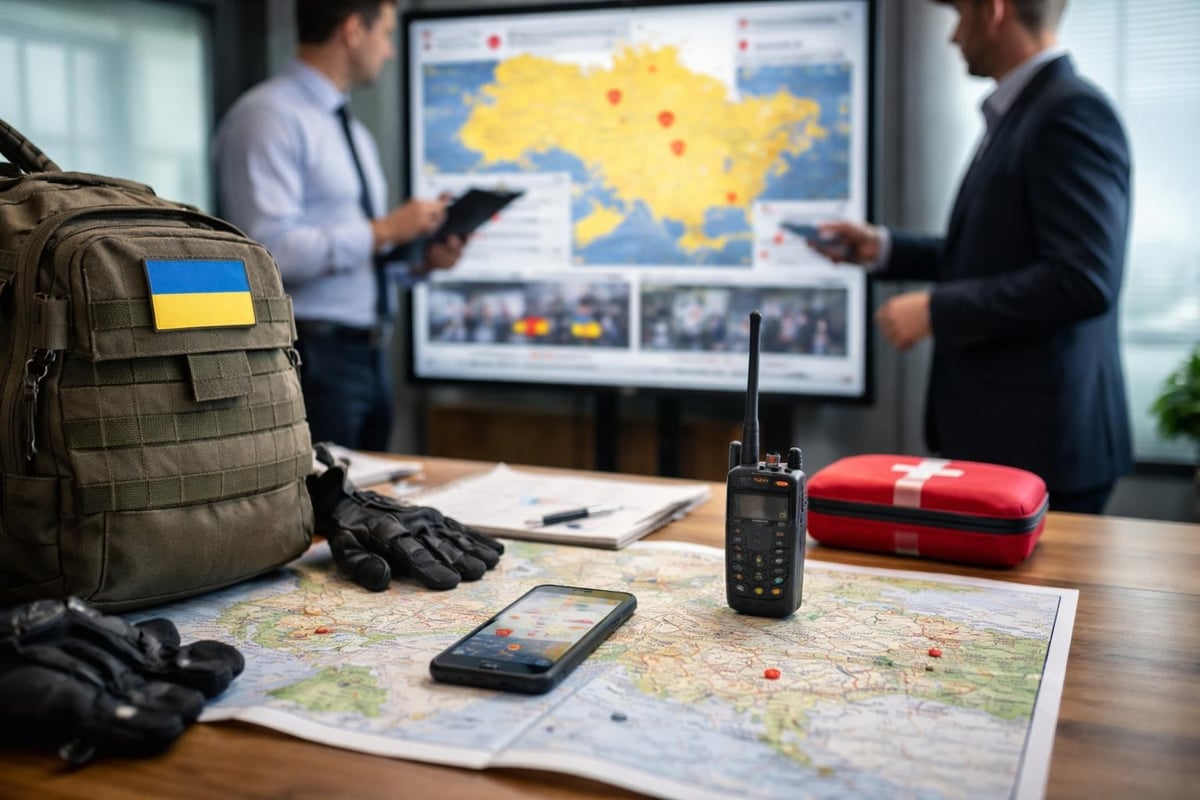
Effective movement security requires comprehensive planning and real-time monitoring. Key components include:
Pre-travel threat assessments incorporating current conflict dynamics
Route planning that avoids high-risk areas and identifies safe havens
Communication protocols ensuring regular check-ins and emergency contact capability
Emergency extraction planning with predetermined evacuation routes and procedures
Local coordination with security services and reliable ground support
Travel Safety & Journey Management services have become essential for organisations maintaining operations in high-risk environments, providing the planning, monitoring, and response capabilities needed to protect personnel effectively.
Residential and Site Security
For expatriate staff and local personnel, workplace and residential security demands constant attention. Considerations include:
Secure accommodation selection and hardening
Journey management between residence and workplace
Emergency shelter and safe room capabilities
Security personnel deployment and training
Communication systems that function during infrastructure outages
The Chartered Institute of Internal Auditors notes that businesses face a "perfect storm" of compounded risks, with security concerns intersecting with cybersecurity threats and macroeconomic uncertainty.
Cybersecurity in Conflict Zones
Ukraine's business risk assessment must incorporate the heightened cyber threat environment that accompanies kinetic conflict. State and non-state actors deploy sophisticated cyber capabilities targeting critical infrastructure, financial systems, and corporate networks.
Threat Vectors and Vulnerabilities
Organisations face multiple cyber risk categories:
Targeted attacks on businesses perceived as supporting one side
Collateral damage from broad-spectrum malware campaigns
Data exfiltration attempts targeting commercial intelligence
Ransomware deployment exploiting distracted security teams
Supply chain compromise through infected software or hardware
The convergence of physical and digital security risks requires integrated threat management approaches. Businesses cannot treat cyber and physical security as separate domains when operating in conflict-affected regions.
Regulatory and Compliance Complexity
The legal and regulatory environment adds another layer of risk to Ukraine's business environment. Sanctions regimes, export controls, and enhanced due diligence requirements create compliance challenges for international organisations.
Sanctions Navigation
UK, EU and allied sanctions now extend across financial systems, energy, defence, and supply chains, with thousands of entities designated and ongoing additions tightening compliance expectations. For companies, this creates a dual risk: direct legal exposure through inadvertent dealings with sanctioned parties, and indirect exposure through third-party relationships, where opaque supply chains or intermediaries may facilitate sanctions evasion.
The regulatory burden is significant, with firms required to implement robust screening, monitoring, and escalation processes, as breaches can result in civil penalties, criminal liability, and reputational damage. In parallel, sanctions have contributed to disruption across critical sectors such as energy, logistics, and industrial inputs, increasing volatility, constraining supply routes, and forcing businesses to reassess sourcing and operational continuity. Operating in Ukraine or in supply chains linked to the region requires not only physical security and resilience but also a mature sanctions compliance posture, enhanced due diligence, and continuous monitoring of rapidly changing geopolitical and regulatory conditions.
Anti-Corruption Measures
Ukraine has implemented reforms aimed at improving transparency and reducing corruption, including the Prozorro electronic procurement system. However, businesses must maintain robust anti-bribery controls and third-party vetting processes, particularly when dealing with government contracts or regulated sectors.
Strategic Approaches to Risk Mitigation
Organisations successfully managing Ukraine business risk deploy comprehensive, intelligence-led strategies that integrate multiple protective measures. Rather than relying on single-point solutions, effective approaches combine threat intelligence, operational security, personnel protection, and contingency planning.
Intelligence-Led Decision Making
Current, reliable information forms the foundation of risk management:
Regular intelligence briefings enable management teams to make informed decisions about operational tempo, personnel movements, and resource allocation. For insights on related geopolitical dynamics, examining how regional tensions affect business operations provides valuable context.
Operational Continuity Planning
Business continuity management takes on heightened importance in conflict environments:
Identify critical business functions that must continue under all scenarios
Develop redundant systems for essential operations
Establish alternative locations for key activities
Secure distributed energy solutions to maintain the power supply
Create communication protocols that function during infrastructure degradation
Foreign investors in Ukraine have increasingly adopted distributed energy solutions and supply chain diversification as core mitigation strategies, recognising that traditional business continuity approaches prove insufficient in active conflict zones.
Insurance and Financial Risk Transfer
Traditional insurance mechanisms face significant constraints in high-risk conflict environments. Standard commercial policies often contain war exclusion clauses, leaving organisations exposed to substantial uninsured losses.
Specialised Coverage Options
Businesses operating in Ukraine typically require:
Political risk insurance covering expropriation, political violence, and contract frustration
War risk coverage for physical assets and inventory
Kidnap and ransom insurance for personnel protection
Business interruption coverage specifically excluding war provisions
Marine cargo war risk for goods in transit
Premium costs reflect the elevated threat environment, and coverage may include geographic exclusions or operational restrictions. Organisations must carefully evaluate whether risk transfer through insurance represents better value than risk mitigation through enhanced security measures.
Long-Term Strategic Considerations
Ukraine business risk assessment extends beyond immediate operational concerns to fundamental questions about long-term strategic commitment. Management teams face decisions about whether to maintain, reduce, or exit Ukrainian operations entirely.
Decision Framework Elements
Strategic choices should incorporate:
Reputational implications of different courses of action
Competitive positioning if rivals exit the market
Stakeholder expectations from investors, employees, and customers
Reconstruction opportunities in an eventual post-conflict environment
Sunk costs versus future investment requirements
Some organisations view current challenges as temporary obstacles before significant reconstruction investment opportunities emerge. Others conclude that risk levels exceed acceptable thresholds regardless of potential future returns. Neither position is inherently correct; appropriateness depends on risk appetite, sector dynamics, and specific operational circumstances.
Human Capital Retention
Maintaining skilled local workforces presents particular challenges. Brain drain, mobilisation requirements, and security concerns affect talent availability. Companies committed to a long-term presence must invest in employee support, flexible working arrangements, and competitive compensation that acknowledge the heightened personal risk for staff who choose to remain.
Sector-Specific Risk Profiles
Ukraine business risk manifests differently across industries. Understanding sector-specific vulnerabilities enables more targeted mitigation strategies.
Many manufacturers have relocated production to western Ukraine or suspended operations entirely pending improved security conditions.
Integrated Security Architecture
Effective business risk management in Ukraine requires a coordinated security architecture encompassing physical protection, cybersecurity, personnel safety, and intelligence capabilities. Siloed approaches prove inadequate when threats span multiple domains simultaneously.
Organisations will benefit from establishing security governance structures with clear accountability, regular risk assessments, and adaptable response protocols. The principles underlying comprehensive risk management in complex environments apply directly to Ukrainian operations, though implementation details must reflect specific threat landscapes.
Security measures should scale appropriately to risk levels and operational requirements. A representative office with minimal staff requires different protection than a manufacturing facility employing hundreds of people. Resource allocation must align with threat assessment outcomes and critical asset identification.
Navigating business risk in Ukraine in 2026 demands sophisticated, multi-layered approaches that integrate intelligence, operational security, and strategic planning. Organisations cannot eliminate risk, but can manage exposure through informed decision-making and appropriate protective measures. Whether maintaining existing operations, evaluating market entry, or planning eventual reconstruction participation, professional risk management capabilities prove essential. Alma provides intelligence-led security, protection, and consultancy services to safeguard personnel, assets, and operations in Ukraine and other similarly complex environments globally.
QUESTIONS? NEED SUPPORT?
Reach out to our team with any questions about working with Alma, engaging in a consulting agreement, or using this website. We're here to support your understanding of our platform and services.