Risk Management Best Practices for Security Operations, Planning, Response and Long-Term Resilience
Organisations operating in complex environments need a structured, intelligence-led approach to risk management to protect people, assets, and continuity. This article outlines best practices for identifying, assessing, prioritising, and mitigating risks, while embedding risk awareness into leadership, culture, and operational planning. It also highlights the importance of continuous monitoring, crisis preparedness, business continuity, and learning from incidents to strengthen long-term organisational resilience.
Organisations operating in complex environments face an increasingly volatile threat landscape. From geopolitical instability to cyber vulnerabilities and operational disruptions, the spectrum of potential risks continues to expand. Implementing robust risk management best practices has become essential for maintaining business continuity, protecting personnel, and safeguarding assets. A structured approach to identifying, assessing, and mitigating risks enables organisations to operate with confidence whilst minimising exposure to harm. This comprehensive guide explores proven methodologies and practical frameworks that security-conscious organisations can deploy to strengthen their resilience.
Understanding the Foundation of Effective Risk Management
Risk management best practices begin with establishing a clear framework that aligns with organisational objectives and operational realities. The ISO 31000 standard provides internationally recognised guidelines that organisations across sectors can adapt to their specific contexts. This standard emphasises that risk management should be integrated into all organisational activities rather than treated as a standalone function.
Effective risk management rests on several foundational principles:
Integration with decision-making processes at all levels
Structured yet flexible approaches tailored to context
Inclusive stakeholder engagement throughout the process
Dynamic response to changing circumstances
Continuous improvement based on lessons learned
Organisations must recognise that risk management is not a single event but an ongoing cycle of assessment and adjustment. Environmental factors, threat actors, and operational parameters evolve constantly, requiring regular review and refinement of risk strategies.
Establishing Organisational Risk Appetite
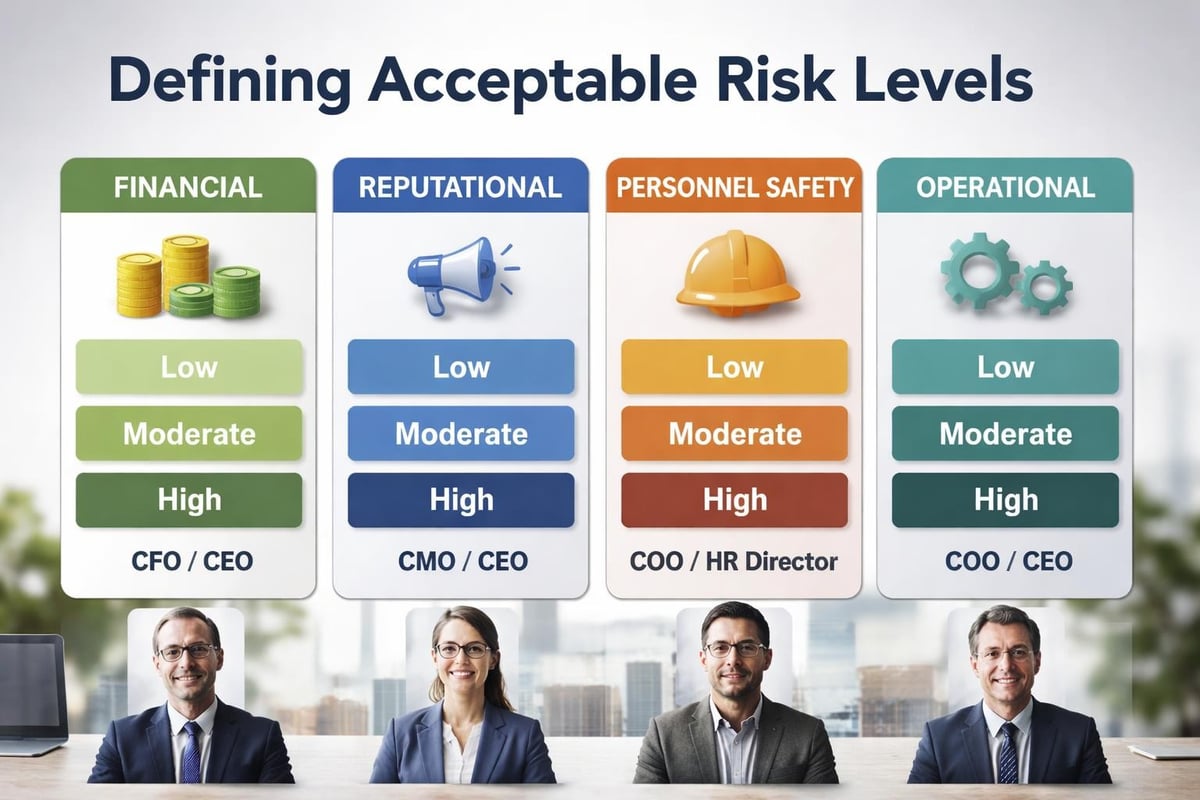
Before implementing specific risk management best practices, organisations must define their risk appetite and tolerance levels. Risk appetite represents the amount and type of risk an organisation is willing to accept in pursuit of its objectives. This threshold varies significantly based on sector, operating environment, and strategic priorities.
across sectors, operating environmentsLeadership teams should document clear parameters that guide decision-making across the organisation. A technology firm expanding into emerging markets will have different risk tolerances than a humanitarian organisation operating in conflict zones. These parameters must be communicated effectively throughout all levels of the organisation to ensure consistent application.
Implementing Systematic Risk Identification
Comprehensive risk identification forms the cornerstone of any effective risk management programme. Organisations must deploy multiple methodologies to capture the full spectrum of potential threats. Relying solely on historical data or intuitive assessment leaves significant blind spots that adversaries or circumstances can exploit.
Structured Assessment Methodologies
Risk identification should incorporate both internal and external perspectives through:
Threat landscape analysis examining geopolitical, economic, and social factors
Vulnerability assessments evaluating weaknesses in systems, processes, and infrastructure
Stakeholder consultations gathering insights from personnel at all organisational levels
Scenario planning, exploring plausible future events and their potential impacts
Intelligence gathering, monitoring open-source and proprietary information streams
Organisations with global operations must consider location-specific risks alongside enterprise-wide threats. A Risk Consultancy service can provide the expertise needed to conduct thorough assessments across diverse operating environments, particularly in regions where local knowledge proves essential.
The risk identification process should be documented systematically, resulting in a comprehensive risk register that captures each identified threat, its potential impact and likelihood, and current control measures. This register becomes a living document that teams update regularly as new information emerges.
Leveraging Intelligence-Led Approaches
Intelligence-led risk identification moves beyond reactive responses to enable proactive threat anticipation. By systematically collecting, analysing, and disseminating relevant information, organisations can identify emerging risks before they materialise into incidents.
This approach requires establishing robust information-gathering capabilities to monitor relevant indicators across multiple domains. For organisations operating internationally, tracking political developments, security incidents, economic shifts, and social movements provides early warning of potential disruptions.
Conducting Rigorous Risk Assessment and Prioritisation
Once risks are identified, organisations must assess their significance and prioritise responses accordingly. Not all risks warrant equal attention or resources. Effective risk management best practices include structured methodologies for evaluating both likelihood and potential impact.
Quantitative and Qualitative Assessment Methods
Risk assessment combines quantitative metrics with qualitative judgement to produce meaningful evaluations. Quantitative approaches assign numerical values to probability and impact, enabling mathematical risk scoring. Qualitative methods rely on expert judgement and descriptive scales to characterise risks.
Most organisations benefit from hybrid approaches that leverage both methodologies. Financial risks often lend themselves to quantitative analysis, whilst reputational or strategic risks may require more nuanced qualitative assessment.
The risk control strategies organisations select depend heavily on accurate assessment. Overestimating risks leads to inefficient resource allocation, whilst underestimating creates dangerous exposure.
Creating Risk Matrices and Heat Maps
A visual representation of assessed risks helps leadership teams quickly grasp the overall threat landscape. Risk matrices plot identified risks by likelihood and impact, creating clear prioritisation frameworks.
Heat maps typically categorise risks into four zones:
Critical risks requiring immediate senior leadership attention and substantial resources
High risks needing prompt mitigation planning and dedicated ownership
Moderate risks warranting monitoring and standard control measures
Low risks are suitable for routine oversight and periodic review
These visualisations facilitate strategic discussions about resource allocation and risk tolerance. They also support communication with boards, investors, and other stakeholders who require concise summaries of organisational risk exposure.
Developing Comprehensive Mitigation Strategies
After assessing and prioritising risks, organisations must develop targeted mitigation strategies. Risk management best practices recognise four primary response options: avoidance, reduction, transfer, and acceptance. The appropriate strategy depends on risk characteristics, organisational capabilities, and cost-benefit analysis.
Risk Avoidance and Reduction Techniques
Risk avoidance eliminates exposure entirely by discontinuing the activity generating the risk. Whilst effective, this approach may conflict with strategic objectives. Organisations might avoid high-risk markets or activities when alternatives exist that achieve similar outcomes with lower exposure.
Risk reduction implements controls to decrease either the likelihood or the impact. This most common approach includes technical controls, procedural safeguards, and capability enhancements. For organisations with personnel in challenging environments, investing in training programmes equips teams with skills to recognise and respond to threats effectively.
Implementation of reduction strategies should follow a structured process:
Identify specific control measures addressing identified vulnerabilities
Assign clear ownership and accountability for implementation
Establish timelines and resource requirements
Document procedures and communicate expectations
Monitor effectiveness and adjust as necessary
Risk Transfer and Acceptance Decisions
Risk transfer shifts potential consequences to third parties through insurance, contractual arrangements, or outsourcing. Organisations frequently transfer financial risks through insurance policies whilst maintaining operational control. Understanding policy exclusions and limitations is crucial, as many scenarios fall outside standard coverage.
Risk acceptance acknowledges that some risks fall within tolerance levels or that mitigation costs exceed potential benefits. Acceptance requires formal documentation and periodic review to ensure circumstances haven't changed. Leadership must explicitly approve risk acceptance decisions to ensure accountability.
For organisations operating across diverse global environments, combining multiple mitigation strategies often proves most effective. A layered approach creates redundancy that maintains protection even if individual controls fail.
Establishing Robust Monitoring and Review Mechanisms
Risk management best practices emphasise continuous monitoring rather than periodic assessment. The threat environment evolves constantly, and yesterday's mitigation strategies may prove inadequate for tomorrow's challenges. Organisations must establish systems that promptly detect changes in risk profiles.
Key Performance Indicators and Metrics
Effective monitoring requires defining measurable indicators that signal shifts in risk exposure or control effectiveness. These metrics should align with organisational priorities and provide actionable insights.
According to research on standardising risk processes, organisations that implement consistent monitoring frameworks achieve significantly better outcomes than those relying on ad hoc reviews. Regular reporting to leadership ensures risk considerations inform strategic decisions.
Conducting Periodic Risk Reviews
Whilst continuous monitoring tracks specific indicators, comprehensive reviews periodically examine the entire risk landscape. Quarterly or semi-annual reviews should reassess the risk register, evaluate the effectiveness of the mitigation strategy, and identify emerging threats.
These reviews provide opportunities to challenge assumptions, incorporate lessons from incidents, and adjust risk appetite as circumstances evolve. External perspectives often prove valuable, as internal teams may develop blind spots over time.
Fostering Risk-Aware Organisational Culture
Technical frameworks and processes alone cannot deliver effective risk management. Organisations must cultivate cultures where risk awareness permeates decision-making at all levels. Fostering risk-aware cultures requires leadership commitment, clear communication, and appropriate incentives.
Leadership Commitment and Communication
Senior leadership must visibly champion risk management initiatives for them to succeed. When executives consistently incorporate risk considerations into strategic discussions, communicate openly about challenges, and allocate resources to mitigation efforts, the organisation receives clear signals about its priorities.
Effective communication strategies include:
Regular risk briefings at board and executive meetings
Transparent incident reporting without punitive responses to honest mistakes
Accessible channels for raising concerns anonymously
Integration of risk considerations into performance evaluations
Organisations should ensure that personnel understand not only what risks exist but also why certain mitigation measures are necessary. Context helps teams appreciate the reasoning behind procedures that may seem burdensome or inconvenient.
Training and Capability Development
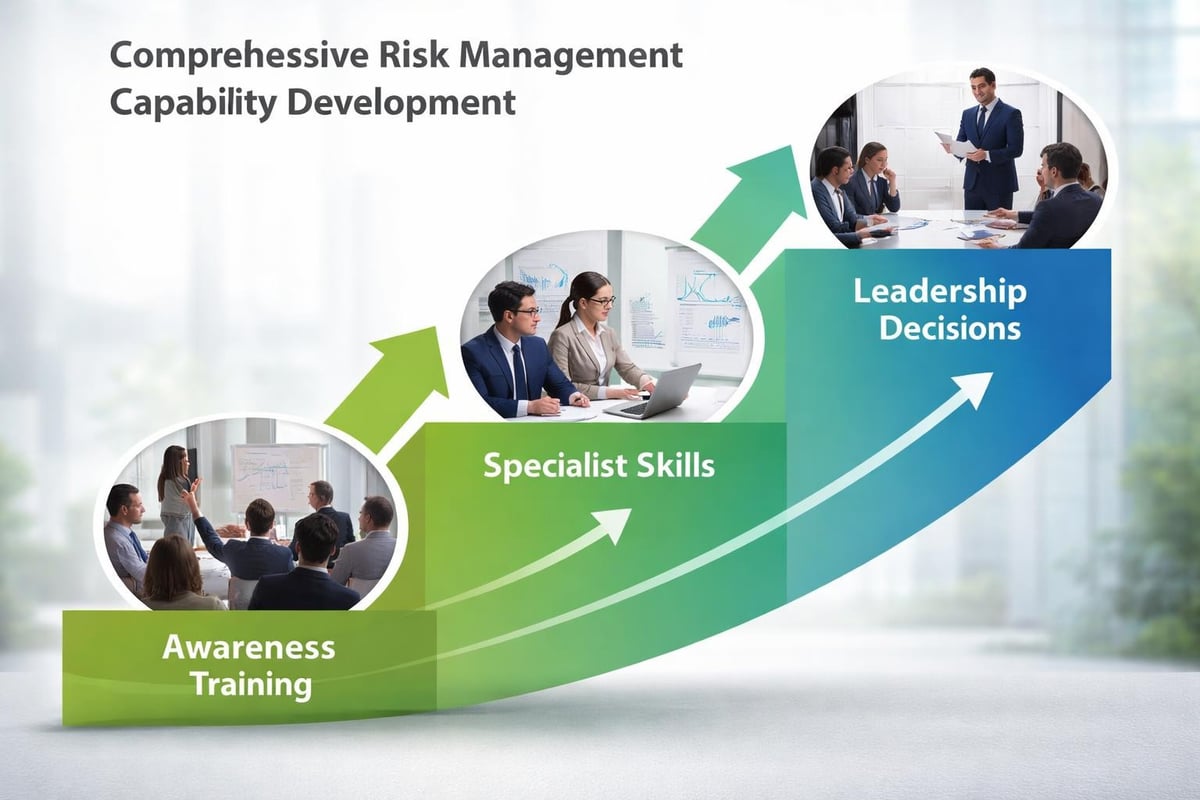
Risk management capabilities must extend throughout the organisation rather than concentrating in specialist functions. Personnel at all levels need appropriate knowledge to identify risks within their areas of responsibility and implement relevant controls.
Training programmes should be tailored to different organisational roles. Frontline personnel require practical skills to recognise and respond to immediate threats. Managers need capabilities for risk assessment and mitigation planning. Executives require frameworks for strategic risk oversight and resource allocation decisions.
Organisations operating in high-risk environments benefit from specialised preparation. Hostile Environment Awareness Training equips personnel with mental frameworks and practical techniques for operating safely in challenging contexts.
Integrating Risk Management with Operational Planning
Risk management best practices emphasise integration with core business processes rather than parallel compliance activities. When risk considerations inform operational planning from inception, organisations avoid costly retrofitting and achieve better outcomes.
Embedding Risk Assessment in Project Planning
Every significant initiative should include risk assessment as a standard component. Project planning should identify potential obstacles, evaluate their significance, and incorporate mitigation measures into timelines and budgets. This proactive approach prevents risk from becoming an afterthought that disrupts implementation.
Integration requires clear accountability structures. Project managers must understand their responsibility for managing risks within their initiatives, whilst risk specialists provide expertise and oversight. This collaborative model balances operational knowledge with technical risk management capabilities.
Travel and Movement Planning
For organisations with internationally mobile personnel, journey management represents a critical application of risk management principles. Travel safety programmes assess route-specific threats, implement appropriate protective measures, and maintain situational awareness throughout movements.
Effective journey management includes:
Pre-travel risk assessments evaluating destinations and routes
Security briefings covering local threats and cultural considerations
Communication protocols ensuring regular contact
Contingency planning for various disruption scenarios
Post-travel debriefing, capturing lessons and updating assessments
These structured approaches significantly reduce exposure whilst enabling organisations to pursue objectives in challenging environments. The investment in systematic planning pays dividends through incident prevention and improved crisis response when circumstances deteriorate.
Preparing for Crisis Response and Business Continuity
Despite robust prevention efforts, some risks will inevitably materialise. Risk management best practices include comprehensive crisis response and business continuity planning that enable organisations to maintain critical functions during disruptions.
Crisis Management Frameworks
Effective crisis response requires pre-established frameworks that enable rapid decision-making under pressure. Crisis management plans should identify potential scenarios, define response structures, establish communication protocols, and assign clear responsibilities.
Regular exercise testing of these frameworks proves essential. Tabletop simulations and full-scale drills reveal gaps in planning, familiarise personnel with procedures, and build confidence for actual incidents. Organisations should conduct exercises at least annually, varying scenarios to test different aspects of response capabilities.
Business Continuity Planning
Business continuity planning ensures that critical functions continue during disruptions. This planning identifies essential processes, establishes recovery time objectives, and implements redundancies enabling continued operation.
According to guidance on compliance and continuity management, organisations should regularly test their continuity plans through realistic scenarios. These exercises reveal dependencies, resource gaps, and procedural weaknesses that planning documents may not capture.
Leveraging Technology for Enhanced Risk Management
Modern risk management increasingly relies on technology platforms that enable more sophisticated analysis, real-time monitoring, and efficient information sharing. Digital tools enhance traditional risk management processes whilst introducing new capabilities previously unavailable.
Risk Management Information Systems
Integrated risk management platforms centralise risk data, automate routine processes, and provide analytical capabilities that surface insights. These systems should connect risk registers with incident reporting, control monitoring, and compliance tracking.
Benefits of integrated platforms include:
Consistent data collection and analysis across the organisation
Automated workflows ensuring timely risk reviews and updates
Dashboard visualisations providing leadership with actionable insights
Audit trails documenting risk decisions and their rationale
Integration with other enterprise systems for comprehensive views
Organisations should select platforms that align with their operating models and scale appropriately. Overly complex systems discourage usage, whilst simplistic tools lack necessary functionality.
Information Security Risk Management
Digital transformation creates expanding cyber risk exposure requiring specialised approaches. ISO/IEC 27005provides frameworks specifically designed for information security risk management, complementing broader organisational practices.
Cyber risk management requires technical expertise alongside traditional risk capabilities. Organisations should assess digital assets, evaluate threat actors and attack vectors, implement layered defences, and establish incident response capabilities. Regular penetration testing and vulnerability assessments ensure controls remain effective against evolving threats.
Learning from Incidents and Near Misses
One distinguishing characteristic of organisations with mature risk management capabilities is systematic learning from both incidents and near misses. Every adverse event or close call provides information that can strengthen future prevention and response.
Incident Analysis and Root Cause Investigation
When incidents occur, a thorough investigation should identify not only immediate causes but also underlying systemic factors. Root cause analysis examines why existing controls failed and what organisational factors contributed to the incident.
Investigation findings should translate into concrete improvements rather than remaining as archived reports. Action plans with assigned ownership, timelines, and success metrics ensure that lessons actually strengthen organisational resilience.
Sharing Lessons Across the Organisation
Insights gained from incidents in one area often have relevance across the organisation. Effective risk management best practices include mechanisms for disseminating lessons widely whilst maintaining appropriate confidentiality.
Knowledge sharing approaches include:
Regular risk briefings highlighting recent incidents and lessons
Case study databases accessible to relevant personnel
Industry forum participation sharing anonymised insights
Integration of lessons into training programmes
Organisations should create a culture of psychological safety that enables honest incident reporting. Punitive responses to mistakes discourage reporting, preventing the organisation from learning and improving.
Engaging External Expertise and Resources
Whilst organisations must build internal risk management capabilities, external expertise provides valuable perspectives, specialised knowledge, and additional resources during peak demand periods. Recognised best practices include strategic engagement with consultants, intelligence providers, and specialist security services.
When to Seek External Support
External expertise proves particularly valuable when organisations face unfamiliar risks, operate in new environments, or require capabilities beyond internal capacity. Rather than developing every capability in-house, strategic partnerships enable organisations to access world-class expertise when needed.
Specialist providers bring depth of experience across diverse scenarios and sectors that individual organisations rarely accumulate. They also offer independence that helps challenge internal assumptions and identify blind spots that familiarity obscures.
Building Strategic Partnerships
Effective external relationships require more than transactional service provision. Strategic partners invest in understanding organisational culture, priorities, and operating contexts. This familiarity enables them to provide tailored guidance rather than generic recommendations.
Organisations should evaluate potential partners based on relevant experience, cultural fit, and demonstrated capability. Reference checks with similar organisations provide insights beyond marketing materials. Long-term relationships deliver better value than constantly changing providers, as deep familiarity enhances service quality.
QUESTIONS? NEED SUPPORT?
Reach out to our team with any questions about working with Alma, engaging in a consulting agreement, or using this website. We're here to support your understanding of our platform and services.