Organisational Risk Management Strategies for Building Resilience, Improving Oversight and Protecting Operations
Discover organisational risk management strategies, frameworks, and best practices to safeguard operations and build resilience in 2026.
Every organisation faces an interconnected web of threats that can disrupt operations, damage reputation, or compromise strategic objectives. Understanding and managing organisational risk has become increasingly critical as businesses navigate complex global environments, emerging technologies, and evolving security landscapes. From cybersecurity vulnerabilities to geopolitical instability, the spectrum of potential exposures demands a structured, intelligence-led approach that goes beyond traditional risk assessment.
Organisational risk encompasses all potential events, conditions, or circumstances that could adversely affect an organisation's ability to achieve its objectives. This includes financial risks, operational disruptions, reputational damage, regulatory non-compliance, and physical security threats.
The modern risk landscape has expanded dramatically over the past decade. Organisations now contend with sophisticated cyber threats, supply chain vulnerabilities, climate-related disruptions and rapidly changing regulatory environments. The interconnected nature of these risks means that a single incident can trigger cascading failures across multiple domains.
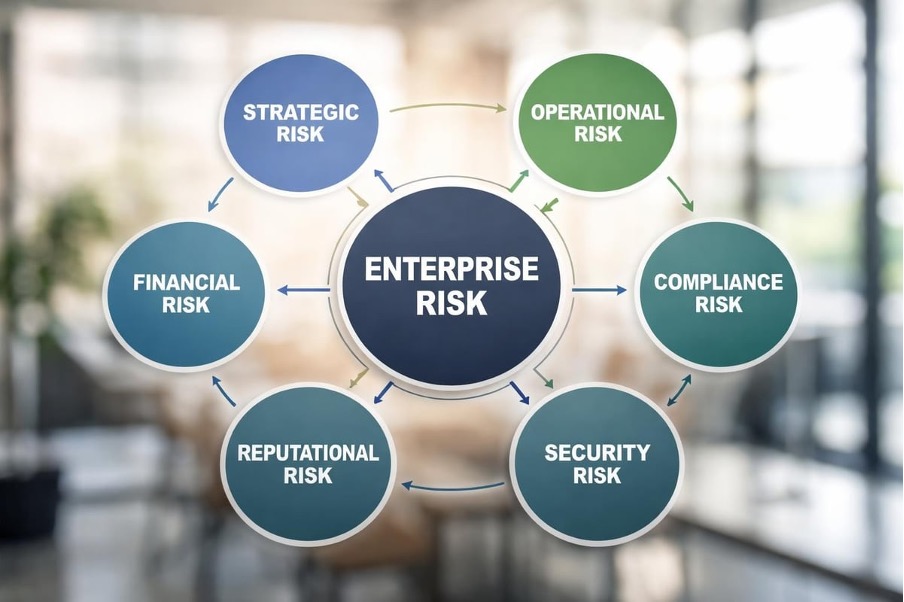
Different types of organisational risk require distinct management approaches and mitigation strategies. Understanding these categories helps organisations develop comprehensive protection frameworks.
Strategic risks threaten an organisation's long-term direction and competitive position. These include market shifts, disruptive technologies, failed mergers, and poor strategic planning. Operational risks arise from internal processes, systems, or people, encompassing everything from supply chain disruptions to workplace safety incidents.
Financial risks involve exposure to market volatility, credit defaults, liquidity constraints, and currency fluctuations. Compliance risks stem from failing to meet regulatory requirements, industry standards, or contractual obligations. Reputational risks can arise from any incident that damages stakeholder trust, ranging from data breaches to ethical lapses.
Security-related risks deserve particular attention in 2026's threat environment. Physical security concerns range from workplace violence to terrorism, while information security risks include data breaches, ransomware attacks, and intellectual property theft. The NIST Cybersecurity Framework provides valuable guidance for organisations seeking to strengthen their defensive posture against digital threats.
Effective organisational risk management requires systematic identification, assessment, prioritisation, and mitigation of threats. International standards provide valuable blueprints for developing comprehensive frameworks.
ISO 31000 establishes globally recognised principles for risk management that organisations can adapt to their specific contexts. The standard emphasises the integration of risk management into all organisational activities, the use of structured, comprehensive approaches, and the customisation to organisational objectives and the external context.
The foundation of any risk management program begins with thorough identification of potential threats. Organisations should employ multiple techniques to ensure comprehensive coverage:
• Scenario analysis to explore potential future events and their impacts
• SWOT analysis examining strengths, weaknesses, opportunities, and threats
• Historical data review identifying patterns from past incidents
• Stakeholder consultation gathering insights from employees, customers, and partners
• External intelligence monitoring geopolitical developments, industry trends, and emerging threats
Once identified, risks must be assessed for likelihood and potential impact. ISO 31010 guides on selecting appropriate risk assessment techniques, ranging from qualitative methods, such as risk matrices, to quantitative approaches, such as Monte Carlo simulation.
The AssessITS methodology integrates multiple established standards to provide organisations with comprehensive guidelines for conducting IT and cybersecurity risk assessments. This integrated approach helps organisations maintain consistency across different risk domains while meeting various compliance requirements.
After identifying and assessing organisational risk exposures, leaders must develop appropriate response strategies. The four primary risk response categories are avoidance, mitigation, transfer, and acceptance.
Risk avoidance involves eliminating the threat entirely by changing plans or approaches. A company might avoid geopolitical risk by choosing not to operate in unstable regions. Risk mitigation reduces the likelihood or impact through controls, safeguards, and preventive measures.
Risk transfer shifts financial or operational burden to third parties through insurance, contracts, or outsourcing arrangements. Risk acceptance involves acknowledging certain exposures when mitigation costs exceed potential impacts or when risks align with organisational risk appetite.
Control implementation transforms risk management from planning to action. Organisations should establish layered defences addressing multiple threat vectors simultaneously.
Preventive controls stop incidents before they occur. These include access restrictions, background checks, security awareness training, and physical barriers. Detective controls identify incidents as they happen through monitoring systems, audits, and surveillance. Corrective controls minimise damage and restore normal operations through incident response plans, backup systems, and crisis management procedures.
For organisations operating in complex environments, professional Risk Consultancy services can provide the expertise needed to identify, assess, and mitigate potential threats before they escalate into critical issues. This intelligence-led approach ensures that protective measures remain proportionate to actual risk levels.
The Committee of Sponsoring Organisations (COSO) framework helps organisations evaluate and improve internal control systems, ensuring that risk management practices integrate effectively with broader governance structures. Strong governance provides oversight, accountability, and strategic direction for risk management activities.

Different industries face unique organisational risk profiles requiring specialised approaches. Financial services organisations contend with market volatility, regulatory complexity, and cybersecurity threats targeting high-value data. Healthcare institutions must protect patient information while ensuring continuity of critical services.
Manufacturing companies face supply chain vulnerabilities, workplace safety hazards, and quality control challenges. Technology firms navigate intellectual property theft, rapid obsolescence, and talent retention issues. Energy sector organisations manage environmental risks, infrastructure vulnerabilities, and geopolitical dependencies.
Organisations operating internationally encounter additional layers of complexity. Geopolitical risk assessment becomes essential for companies with global footprints, particularly those working in emerging markets or regions experiencing political instability.
Employee safety represents a critical component of organisational risk management. Companies sending personnel to high-risk environments must implement comprehensive safety protocols addressing pre-travel preparation, in-country support, and emergency response capabilities.
1. Pre-deployment risk assessment evaluating destination threats and employee vulnerabilities
2. Security briefings provide personnel with context-specific safety information
3. Communication systems ensuring reliable contact between travellers and security teams
4. Emergency response plans establish clear protocols for crisis situations
5. Post-travel debriefing , capturing lessons learned and updating risk assessments
Organisations can strengthen preparedness through hostile envirtive measuresonment awareness training that equips teams with practical skills for operating safely in challenging locations. Thinomous decision-making training covers situational awareness, crisis decision-making, and emergency business response fundamentals. Technology and Emerging Risk Landscapes
The digital transformation accelerating across all sectors introduces new dimensions to organisational risk. Cloud computing, artificial intelligence, Internet of Things devices, and remote work arrangements create expanded attack surfaces and novel vulnerabilities.
Cybersecurity threats continue evolving in sophistication and scale. Ransomware attacks can paralyse operations, data breaches expose sensitive information, and supply chain compromises introduce malicious code into trusted systems. The ISO/IEC 27005 standard provides specific guidance for information security risk management within an overall ISMS framework.
As organisations increasingly deploy AI systems, they must address unique risks, including algorithmic bias, data privacy concerns, explainability challenges, and failures in auto. The Unified Control Framework integrates risk management and regulatory compliance for enterprise AI governance under a single set of controls.
Recent research on adversarial machine learning risks underscores the need for comprehensive risk assessment frameworks that evaluate AI system vulnerabilities across diverse deployment contexts. Organisations must consider both technical vulnerabilities and broader societal implications of their AI implementations.
Data governance becomes increasingly critical as organisations collect, process, and store vast amounts of information. Clear policies on data classification, access controls, retention periods, and breach response help organisations manage information-related risks systematically.

Risk management is not a one-off exercise but an ongoing organisational capability. Effective programmes incorporate regular monitoring, systematic reporting, and continuous improvement cycles that adapt to evolving threat landscapes.
Organisations should establish key risk indicators (KRIs) that provide early warning of escalating exposures. These metrics might include unusual network traffic patterns, rising employee turnover, increasing regulatory violations, or deteriorating supplier performance. Regular KRI monitoring enables proactive intervention before risks materialise into incidents.
Technical controls and formal processes provide the necessary structure, but organisational culture ultimately determines the effectiveness of risk management. Leaders must foster environments where personnel at all levels understand their role in identifying and managing risks.
Effective risk culture characteristics include:
• Transparent communication about threats and vulnerabilities without blame
• Empowered employees who can raise concerns and stop unsafe processes
• Learning orientation that treats incidents as improvement opportunities
• Consistent accountability for risk management responsibilities
• Appropriate resource allocation demonstrating leadership commitment
Training programs should extend beyond compliance checklists to develop genuine risk awareness and sound judgment. Business continuity planning exercises test organisational readiness while reinforcing the importance of preparedness across teams.
Despite the best prevention efforts, some incidents will occur. Organisational resilience depends on capabilities to respond effectively, minimise impacts, and recover operations rapidly. Crisis management planning prepares organisations for high-stakes scenarios requiring rapid decision-making under pressure.
Effective crisis response requires clear command structures, pre-defined communication protocols, and practised response procedures. Organisations should conduct regular exercises testing their crisis management capabilities across various scenarios, from cyber incidents to natural disasters.
Recovery time objectives (RTOs) and recovery point objectives (RPOs) establish clear targets for restoring operations and acceptable data loss levels. These parameters guide investment in backup systems, redundant infrastructure, and recovery capabilities, proportionate to criticality.
Alma’s method helps you anticipate threats and implement protection to strengthen organisational resilience across operational domains. This intelligence-led methodology helps organisations move from reactive crisis response to proactive risk mitigation.
Organisational risk management increasingly intersects with expanding regulatory requirements across jurisdictions and industries. Financial services face stringent capital adequacy and risk reporting requirements. Healthcare organisations must comply with patient privacy regulations. Energy companies navigate environmental protection mandates.
Boards and senior leadership bear ultimate responsibility for risk oversight. Effective governance structures establish clear risk appetites, ensure adequate resources for risk management, and maintain accountability for risk-related decisions. Regular board-level reporting keeps leadership informed of key exposures and mitigation efforts.
The Three Lines of Defence model provides clarity on risk management roles. The first line comprises operational management, which owns and manages risks. The second line includes risk management and compliance functions, which provide oversight and guidance. The third line involves internal audit, which provides independent assurance.
Organisations must document risk management processes, decisions, and rationales to demonstrate regulatory compliance and support continuous improvement. This documentation also proves valuable during incident investigations and legal proceedings.

Effective management of organisational risk requires comprehensive frameworks, specialised expertise, and continuous adaptation to evolving threats. Organisations that invest in systematic risk identification, assessment, and mitigation position themselves to protect operations, safeguard personnel, and maintain competitive advantage even in uncertain environments. Alma delivers intelligence-led security and risk management solutions that help organisations worldwide anticipate threats and implement protective measures tailored to their specific operational contexts and risk profiles.